Skip to content

Our story

Seventeen years of moving the same boxes around.

ReGaylord Boxes exists because somebody in Kansas City was paying money to bury containers that were still perfectly good. We have been undoing that decision, one truckload at a time, since 2009.
Founded
2009, Kansas City, KS
People
31, most of them on the floor
Boxes handled
≈ 40,000 every month

Talk to the yard

Whether you are buying, selling or writing about us — this form reaches the same desk. Tell us what you are after.

A working business address — we reply by email only

US or Canadian number, e.g. (816) 555-0134

Two-letter code or full name, e.g. KS or Kansas

US ZIP (66115 or 66115-1204) or Canadian (M5V 3L9)

Whole number — units, pallets or truckloads

We reply by email — ReGaylord has no telephone line. Your number is only used if a driver needs dock directions. Answered inside one business day.

The premise

We never learned to think of an empty box as rubbish.

The packaging industry is very good at making containers and extremely bad at retrieving them. A gaylord box is manufactured, filled once, shipped once, emptied, and then — in the overwhelming majority of cases — flattened into a compactor within an hour of being unloaded. It is, at that moment, structurally identical to the box the same plant will buy new next Tuesday.

Everything we do follows from taking that absurdity seriously. Not as a slogan: as a logistics problem with an inventory ledger, a grading standard, a repair bench and a fleet attached to it. Reuse is not a moral posture at ReGaylord. It is the product.

The environmental case is almost embarrassingly strong, which is why we publish the arithmetic rather than the adjectives. Re-running an existing five-wall gaylord avoids roughly 23 pounds of CO₂e compared with manufacturing its replacement from virgin fibre. It avoids around 65 gallons of process water. It keeps 24 pounds of board out of a landfill or, at best, out of a pulper that would have shortened the fibre by another cycle. Multiply by the forty thousand boxes that pass through this yard every month and the numbers stop being decorative.

What we are not is precious about it. Sometimes a customer genuinely needs new board — food contact without a liner, an export spec, a printed box for a retail programme. We will source that, and we will tell you honestly when used stock is the wrong answer. A reuse company that oversells reuse is just another vendor.
How it happened

Nine moments, in order.

No investment round, no pivot, no rebrand. Mostly just buying a slightly bigger building every few years and refusing to throw anything away.

  1. 2009

    A rented box truck and one stubborn idea

    Odell Marchetti was driving a recycling route past a Kansas City plastics compounder that was paying to landfill perfectly square five-wall gaylords. He asked what they wanted for them. They said take them. He rented a 24-foot box truck that Saturday and sold the first load to a seed processor in Topeka on the Tuesday.

  2. 2011

    Four thousand square feet on Fiberglass Rd

    The first lease — one bay, one dock, no forklift for the first three months. Boxes were graded on the floor by eye and stacked against the wall by size. Two of the customers from that year still buy every month.

  3. 2013

    The grade ladder gets written down

    Reuse only scales if the buyer trusts the description. We stopped saying 'good' and 'rough' and published a five-rung ladder — 1A through 5A — with written reject criteria for each. It is still the same ladder, with one clarification added in 2018 about moisture.

  4. 2015

    The repair bench

    We had been baling boxes that needed twenty minutes of work. A bench, a stapler, a roll of reinforced tape and one patient person turned roughly a third of our reject stream back into sellable 3A stock.

  5. 2017

    Ruthanne Pilcher and our own freight authority

    A partner who had spent a decade in truckload brokerage joined and brought the thing we were missing: control of the trucks. Backhaul matching dropped the delivered cost of a used box below anything a converting plant could quote.

  6. 2019

    The baler, and a promise

    We installed a horizontal baler so that the end of a box's life happened here, under our own roof, weighed and documented. That was the year we committed publicly that nothing arriving at Fiberglass Rd would ever be landfilled. We have not broken it.

  7. 2022

    Forty thousand boxes a month

    The yard reached the scale where we could hold real depth in every standard footprint — which is the point at which a customer can actually switch a production line to used stock without gambling on availability.

  8. 2024

    Cutting table and the upcycled line

    Boxes too damaged to run whole still contain square feet of perfect board. A die-cutting table turned that into pads, dividers, trays and display bases, and gave the reject stream a second destination above the baler.

  9. 2026

    Sixty-eight thousand square feet, thirty-one people

    Core truckload lanes in fourteen states, nationwide LTL, and a customer diversion report that a sustainability team can drop into an annual filing without editing it first.

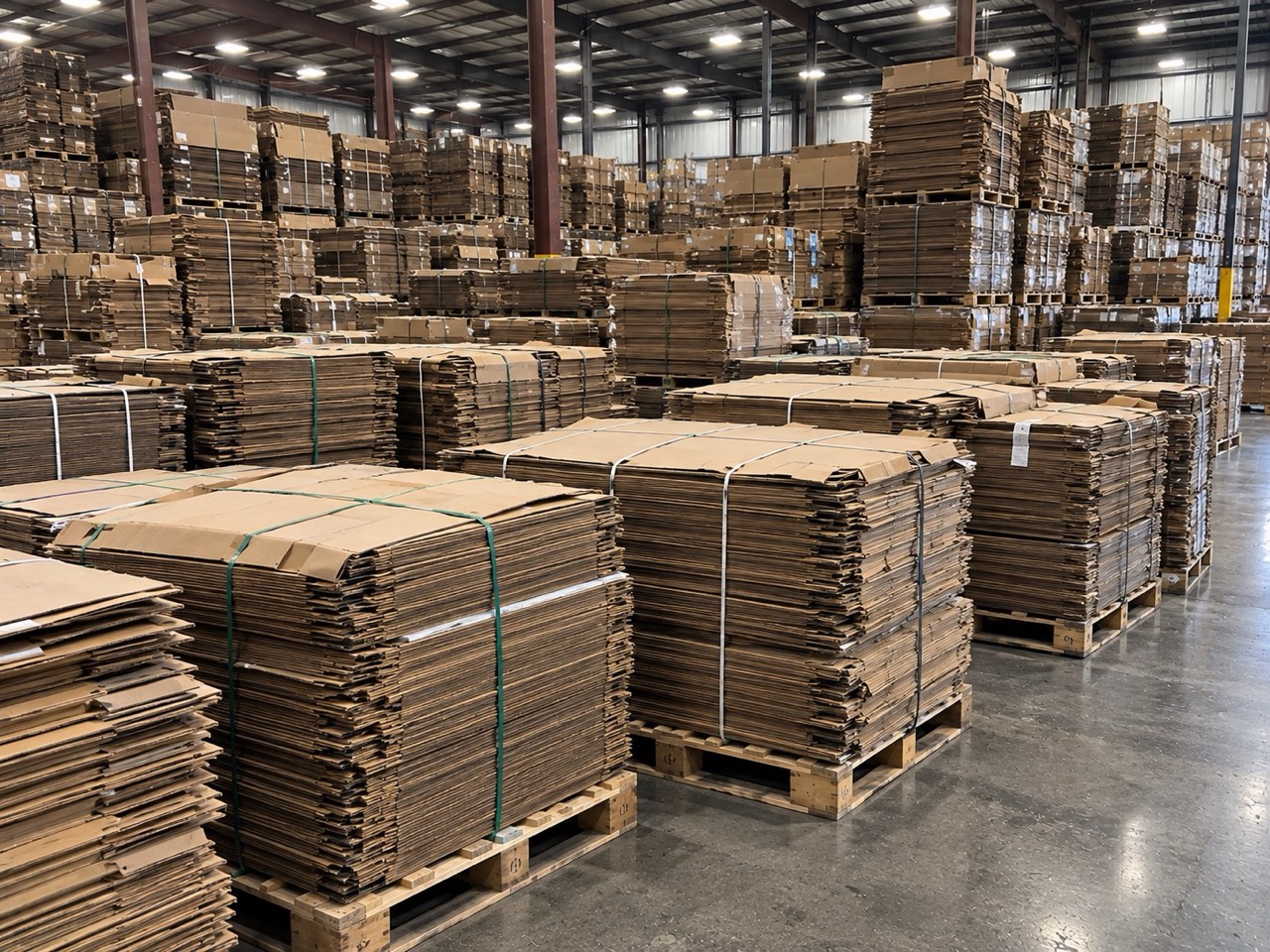
A large warehouse filled to the roof with pallets of banded, flattened corrugated bulk boxes
Sixty-eight thousand square feet, all of it dry storage
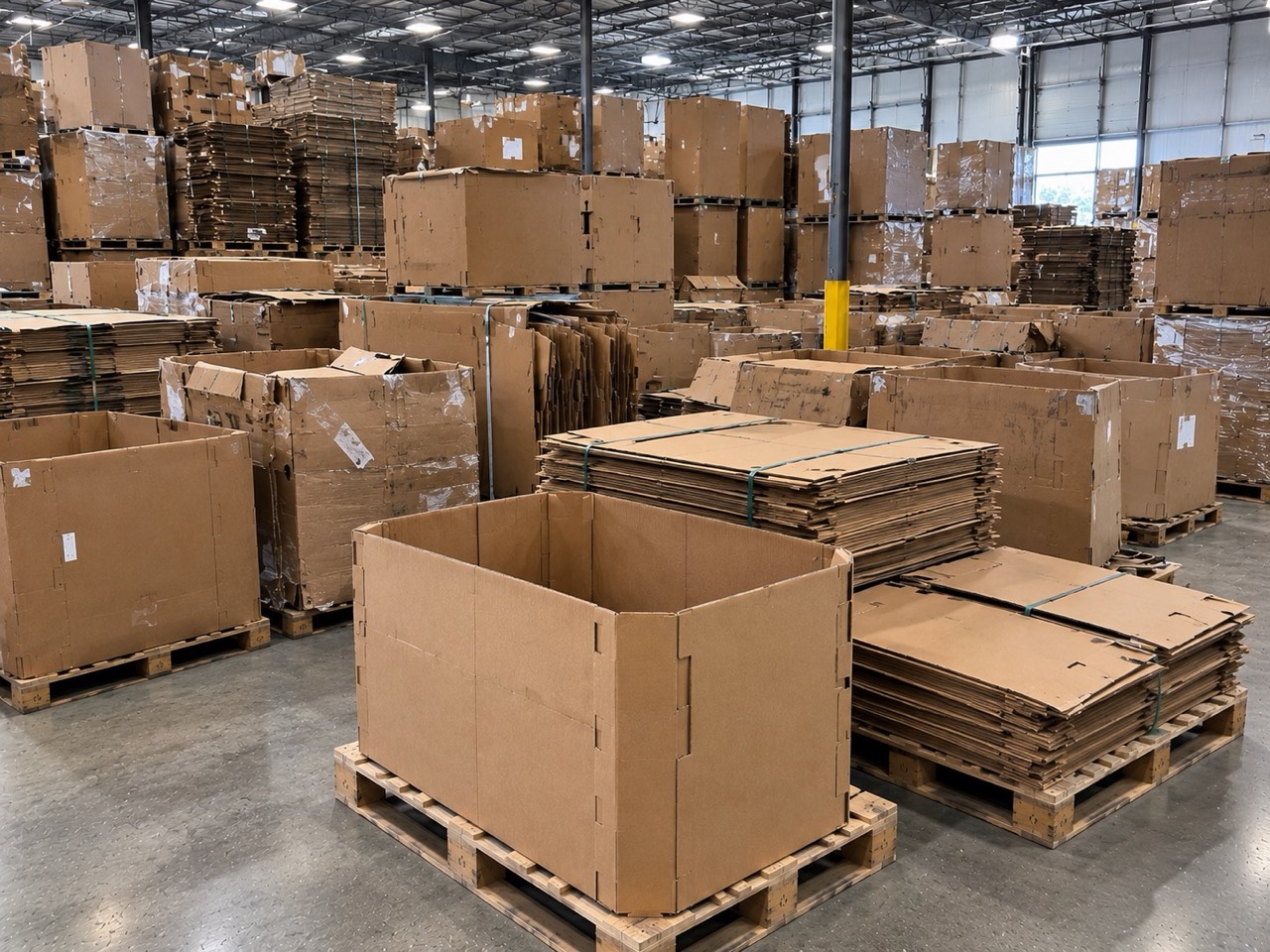
A warehouse floor with assembled used bulk boxes on pallets and banded stacks of flattened board in the background
Assembled stock and flattened bands, waiting on the outbound side
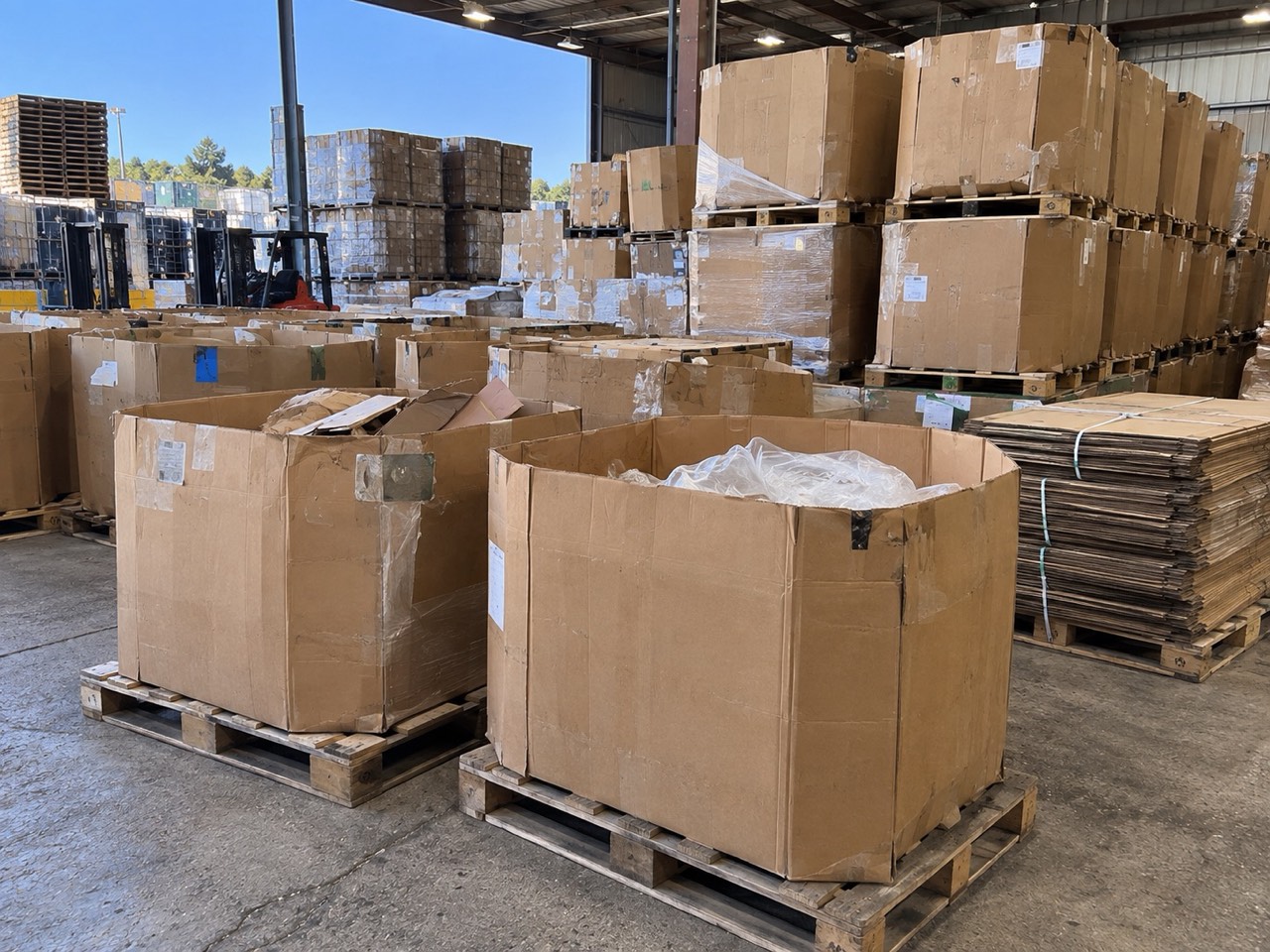
Open warehouse dock with used bulk boxes on pallets in the foreground and a forklift and pallet stacks in the yard beyond
The receiving apron at Fiberglass Rd, mid-morning

What we will not do

Four rules that have cost us money and stayed anyway.

You can build a reuse business on trust or on volume. If you pick volume first, you lose the trust and then you lose the volume.
Ruthanne Pilcher, partner

We do not sell a grade we have not walked

Every lot is physically inspected here before it is offered. We have turned down same-day orders rather than ship a load nobody had opened.

We do not landfill

Reuse, recondition, fabricate, bale. Those are the four exits from this building. There is no fifth.

We do not take contaminated material

No hazardous residue, no food spoilage, no unidentified powders. It protects our people and it protects the next customer.

We do not run a phone room

Everything is written: specs, counts, grades, photographs, freight. It is slower for thirty seconds and faster for the following three weeks.

Square feet
68,000
Under roof at Fiberglass Rd, all of it dry storage.
People
31
Graders, drivers, buyers, a fabricator and one very good bookkeeper.
Landfill tons
0
Since 2019, by written policy and weighbridge ticket.
States
14
On regular truckload lanes; LTL everywhere else.

The people

Who actually runs this.

Thirty-one people, most of them on the floor. These are the ones you are likely to hear from or hear about.

Odell Marchetti — founder
Started the business out of a rented box truck in 2009 after seeing a compounder pay to landfill square five-wall gaylords. Still walks the grading run most mornings.
Ruthanne Pilcher — partner
Joined in 2017 from a decade in truckload brokerage and brought the thing the company was missing: control of the freight. Runs commercial and reporting.
Marisol Veracruz-Haddad — yard manager
Owns the grading standard and the repair bench. If a grade is disputed, hers is the assessment that settles it.
Kwame Oyelaran-Beck — inbound
Every load that arrives is counted, photographed and metered by his team before a box is moved. Sets the tone for everything downstream.
Teodoro Blaskiewicz — fabrication
Runs the sixty-inch cutting table and decides what a failed box becomes. Responsible for the six per cent of inbound that leaves as parts.
Sandor Vitkevich — buyer
Reads incoming requests, walks the floor and answers. Also the person most likely to talk you down a grade.
Nadia Okonkwo-Reyes — logistics
Builds the lane plans and finds the backhauls. The reason a used box can travel four hundred miles and still undercut new.
The grading bench
Four lanes, four people per shift, roughly 480,000 individual grading decisions a year. The most important job in the building.
Drivers and yard
Six tractors, a mixed fleet and the people who make the collection window mean something. Home most nights, which is deliberate.

By the numbers

Seventeen years, quantified.

Published because a reuse company that will not show its own proportions is a recycler with a better website.

ReGaylord in numbers
MeasureFigureNote
Founded2009One rented 24-foot box truck
People31Most of them on the floor
Under roof68,000 sq ftAll dry storage
Dock doors9 dock-high, 2 drive-in3 dedicated inbound, 6 outbound
Containers handled≈ 40,000 / monthRoughly 480,000 grading decisions a year
Standing stock18,000 – 26,000Racked by footprint then grade
Footprints stocked22From a 30-inch cube to a 60-inch tall five-wall
Reuse share of inbound71%Sold to run again as-is
Reconditioned share12%≈ 1,100 boxes a month across the bench
Fabricated share6%Cut into pads, dividers, trays
Baled share11%Genuine end of life only
Landfilled0%Written policy since 2019
Average further trips3.4Across placed stock, measured over two years
Core lanes14 statesPlus nationwide LTL and truckload
Miles on backhaul38%Matched to trucks already running
Quote turnaround1 business dayEvery request read by a buyer

Questions we get asked

Things people want to know about the company itself.

  1. 01

    Are you a recycler or a supplier?

    Both, in that order of preference. Seventy-one per cent of what arrives is sold to run again and eleven per cent is baled. Those proportions are the honest measure of a reuse company and we publish ours.

  2. 02

    Do you own the trucks?

    Six tractors, two flatbeds, three liftgate box trucks and a roll-off tractor, plus brokered capacity under our own authority. Controlling freight is why used boxes are affordable at distance.

  3. 03

    Why no phone number?

    Every quote depends on sizes, grades, counts, photographs and freight that have to be written down anyway. Writing them first is thirty seconds slower and three weeks faster.

  4. 04

    Are you hiring?

    Usually. Graders, forklift operators, CDL-A drivers, a bench technician and a fabricator. Applications are kept on file and we do come back to people.

  5. 05

    Can I visit?

    Yes, by appointment, most weeks. Customers who come once tend to buy on specification rather than on photographs ever after.

  6. 06

    Who owns the business?

    Odell Marchetti and Ruthanne Pilcher. No outside investment, no acquisition, no parent company. Which is why the four rules above have survived.

Seventeen years in, the offer has not changed.

If you have boxes going out, we will buy them. If you need boxes coming in, we have them graded and ready. Tell us which.

Get a quote