Hour 0
Request arrives
It lands on the buyers' queue at Fiberglass Rd. No autoresponder, no routing rules, no chatbot.
Catalogue
Check availability
Give us a size, a grade and a quantity. You will get real counts from this week's floor, not a catalogue page.
How to read this catalogue
What does the box have to survive, and who sees it? Those two answers narrow twenty-two footprints and five grades down to about three options in most cases.
Survival is structural: weight, stack height, whether it gets rained on between buildings, whether a forklift will kiss the corners. That determines wall count and grade floor. Visibility is cosmetic: a box going to a customer, a photograph or a retail floor needs 1A or 2A; a box that never leaves your building can be 3A and save you 30%.
Almost every expensive mistake in used packaging is buying for visibility when only survival mattered. Our buyers will actively talk you down a grade if the application allows it.
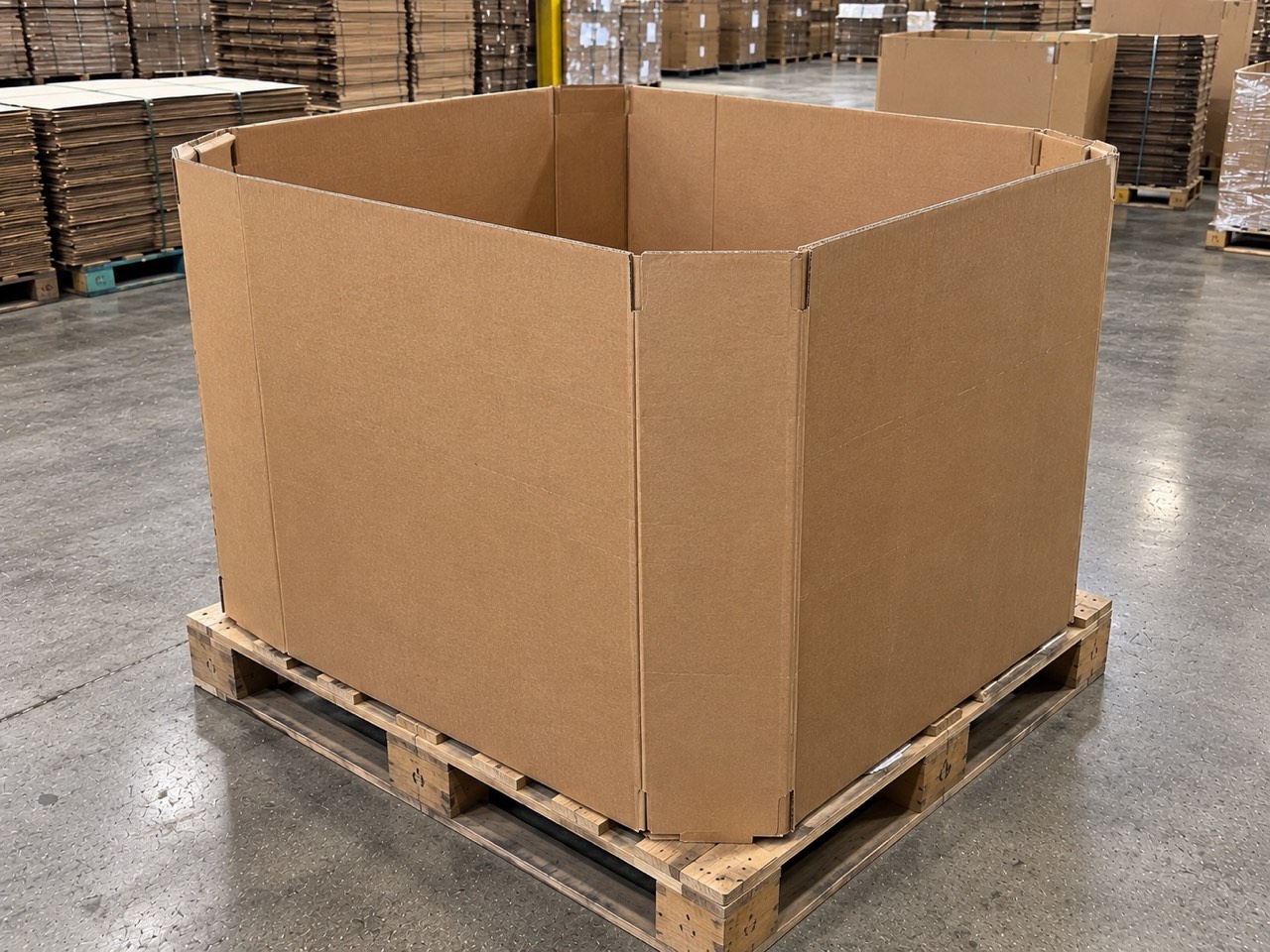
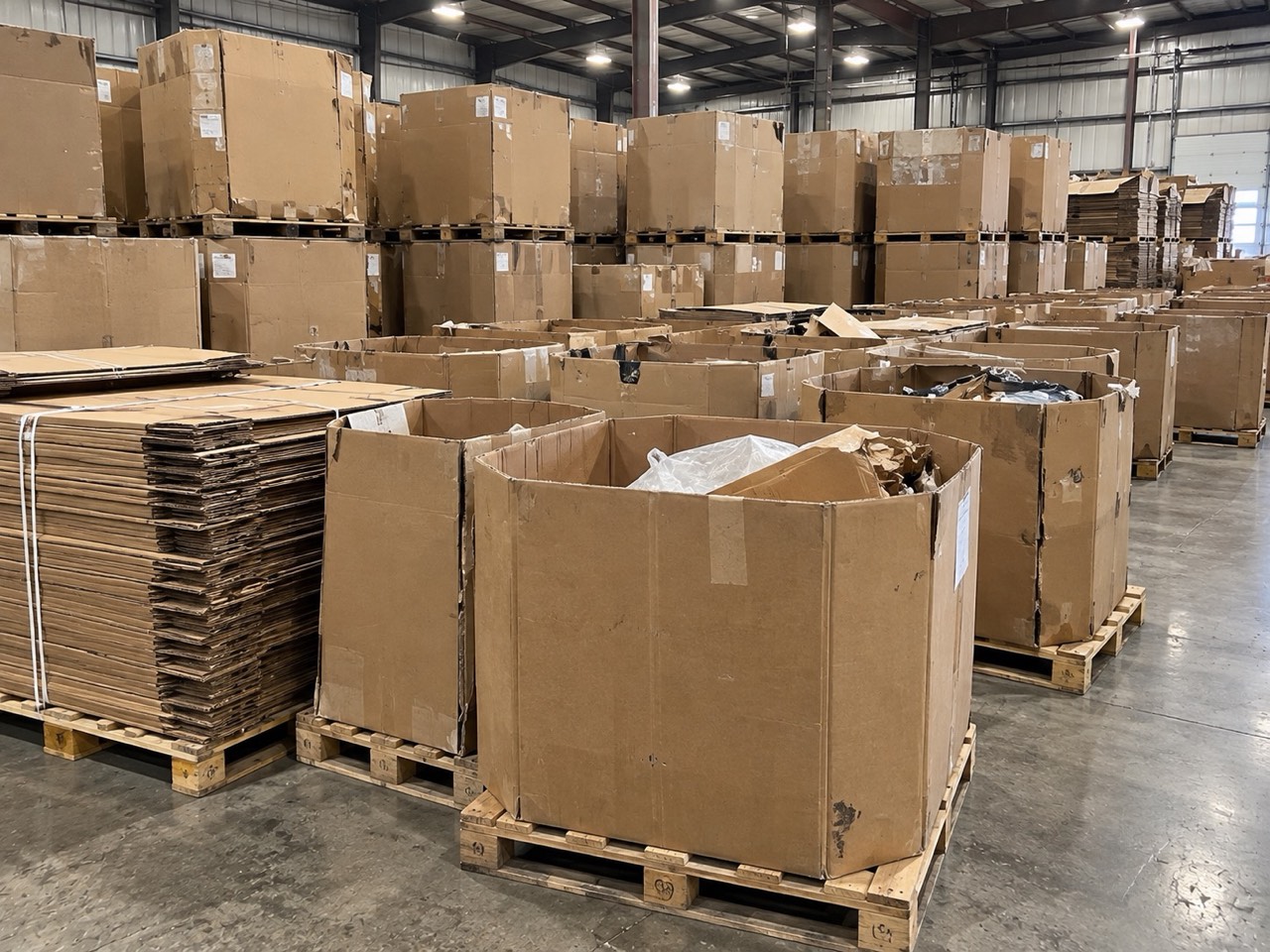
The core of the business. 4-wall and 5-wall bulk boxes in every standard footprint, graded 1A–5A.
From $6.25 / box
OpenEight-sided triple-wall bins for free-flowing resin, powder and granulate that bridges in a square corner.
From $9.50 / bin
OpenSingle and double wall shipping boxes by the bundle, pallet or bale. Sorted by size when volume allows.
From $0.42 / carton
OpenVirgin and high-recycled-content board for the specs that genuinely require it — food contact, export, printed.
Sourced to order
OpenReconditioned and new super sacks with documented wash and test history, spout or duffel top.
From $11 / bag
OpenGMA hardwood, block, plastic and one-way pallets, graded A and B and repaired in house.
From $6 / pallet
OpenPoly and foil liners, telescoping caps, corner board, banding, dunnage bags, clips and labels.
Case quantities
OpenPads, dividers, trays, display bases and prototype furniture cut from boxes that could not run again whole.
From 50 pieces
Open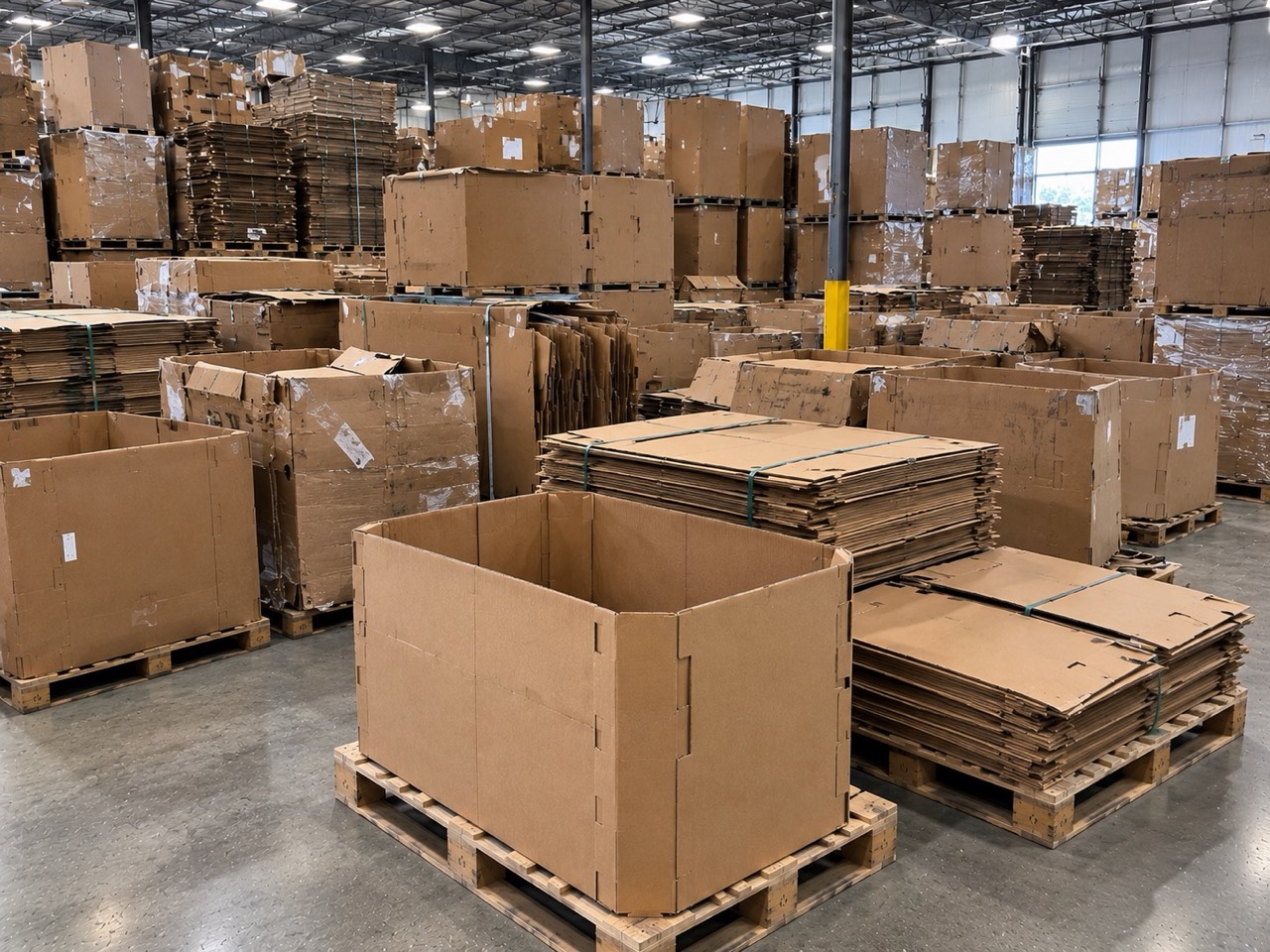
At a glance
A rough decision table. It is not a substitute for a conversation, but it settles most of the obvious cases.
| If you need to… | Start with | Typical grade | Watch out for |
|---|---|---|---|
| Hold 1,500–2,500 lb of dense material on a pallet | 5-wall gaylord | 2A – 3A | Payload rating, not cube, is the binding limit |
| Handle free-flowing pellets or powder | Octabin | 2A – 3A | Discharge method — get the base spec right first |
| Ship bulky, light product | 5-wall 48 × 40 × 48 | 3A | Trailer height and how high it will stack loaded |
| Move product between two of your own buildings | 4-wall gaylord | 3A – 4A | Nothing. This is the cheapest sensible answer |
| Pack customer-facing shipments | Used corrugated cartons | 1A – 2A | Print bleed-through and old label residue |
| Fill and discharge by forklift and spout | Bulk bag (FIBC) | Reconditioned | Wash certificate and safe working load ratio |
| Protect, separate or stack within a box | Pads, dividers, trays | Fabricated | Board direction — flute must run the right way |
| Meet a food-contact or export spec without a liner | New box | New | Whether a liner would let you use used stock instead |
Buying process
Every order runs the same way whether it is one pallet or thirty truckloads. There is no account setup, no catalogue code and no minimum contract.
What makes a request quotable in one reply
Hour 0
It lands on the buyers' queue at Fiberglass Rd. No autoresponder, no routing rules, no chatbot.
Same day
Physical bands checked against your requirement. If the footprint is short this week, you are told that rather than sold a substitute.
Same or next day
Counts, grade, unit price, delivered freight and photographs of the specific lot. Valid seven days, subject to stock.
On approval
Pulled, banded in lots you specify, wrapped and staged. Cancellation is free up to this point.
2 – 5 days
Load-checked and photographed at the door. Our trucks on core lanes, brokered truckload or LTL elsewhere.
After use
At end of life the containers have a residual value rather than a disposal cost. Same photographs, same process, in reverse.
Stock reality
Used inventory is a by-product of other people's production, so availability moves through the year in a pattern that is worth planning around.
| Family | Best months | Tightest months | Lead time | Standing orders? |
|---|---|---|---|---|
| 5-wall 48 × 40 × 36 | Oct – Dec | Jan – Feb | 2 – 5 days | Strongly recommended |
| 4-wall 48 × 40 × 36 | Year round | Jan | 2 – 5 days | Useful above 200/month |
| Tall boxes (42 – 48 in) | Sep – Nov | Mar – May | 3 – 7 days | Recommended |
| Shallow boxes (24 – 30 in) | Year round | — | 3 – 7 days | Rarely needed |
| Half gaylords | Year round | — | 3 – 7 days | Rarely needed |
| Octabins | Tied to resin runs | Unpredictable | 1 – 3 weeks | Essential |
| Used cartons, single size | Nov – Jan | Jun – Aug | Week to week | First-refusal list |
| Pallets | Year round | Harvest weeks | 2 – 5 days | Useful |
| Bulk bags | Variable | Variable | 1 – 2 weeks | Recommended |
| Fabricated parts | Made to order | — | 3 – 14 days | Scheduled runs |
Terms in plain English
Describe what goes in the box, how heavy it is and where it travels. We will come back with the two or three options that actually fit — and the price of each.
Quote request · one business day