Services · selling
Those empties are not waste. They are unsold inventory.
- We pay
- $1.75 – $5.50 per box
- Collection
- Usually within a week
- We supply
- Trailers and labour
Get a buying price
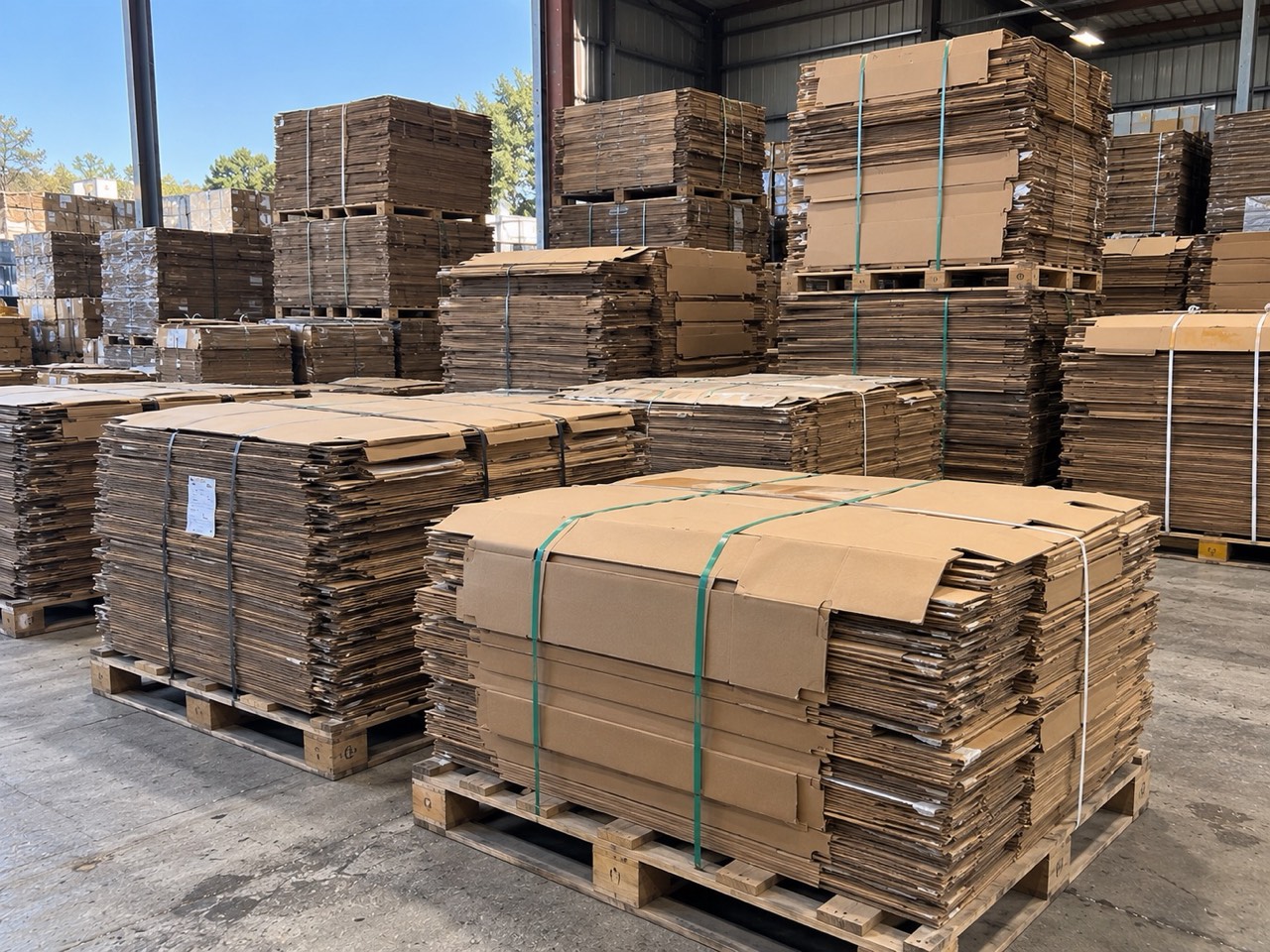
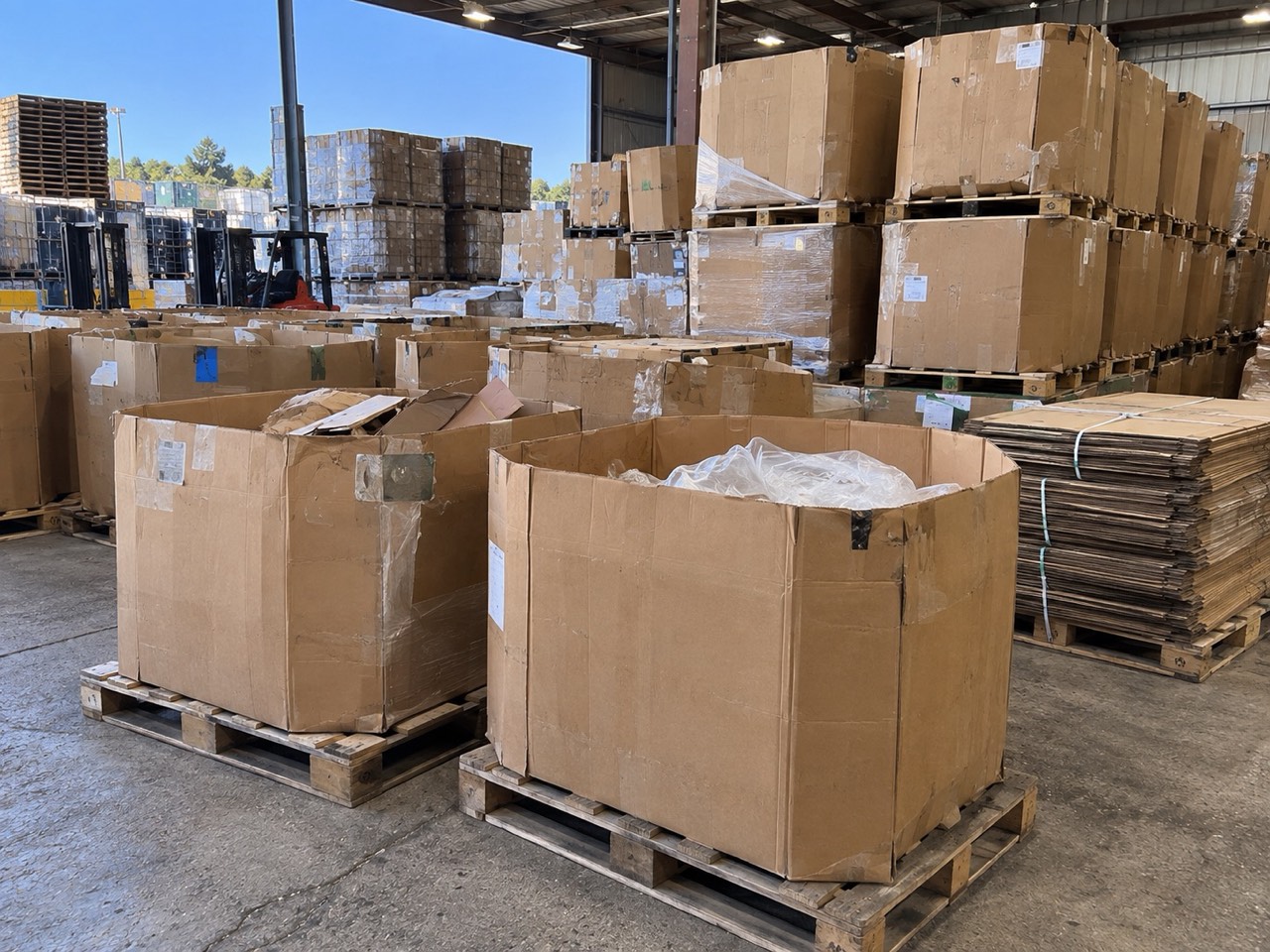
Counts, sizes and three photographs — one wide, one close on a corner, one of a bottom edge. That is a quotable package.
Answer first
Three photographs and a count is a quote.
Send a wide shot of the stack, a close-up of a corner, and one of a bottom edge. Add an approximate count and the box size. That is genuinely everything a buyer needs to give you a real number rather than a range with a get-out clause in it.
The bottom edge photograph is the one people forget and the one that decides the price. Crush there is the single most common reason a stack that looks like 2A from above prices as 4A — and knowing before we send a truck is better for both of us.
A 3PL in the Northland was paying $340 a month in compactor pulls for boxes we were happy to pay them for. Nobody had ever asked the question.
Prices
What we typically pay.
| Item | Condition | We pay | Notes |
|---|---|---|---|
| 5-wall gaylord 48 × 40 × 36 | Clean, dry, square | $3.75 – $5.50 | Top of the range at truckload volume, flattened |
| 4-wall gaylord 48 × 40 × 36 | Clean, dry, square | $2.50 – $3.90 | The most commonly offered box |
| Any gaylord, repairable | Needs bench work | $1.75 – $2.60 | We do the repair; you skip the disposal cost |
| Octabin, uncut | Body, base and cap | $4.00 – $6.25 | Cut discharge ports reduce this sharply |
| 48 × 40 GMA pallet | A or B grade | $3.00 – $7.00 | Broken pallets still have value — ask |
| Bulk bag, 6:1 | Clean, documented history | $2.50 – $6.00 | Unknown contents cannot be quoted |
| Baled OCC | Mill spec | Market per ton | Priced against the published OCC index |
Process
Four steps and one truck.
- 01
Send photographs and counts
Wide, corner, bottom edge. Approximate counts are fine — we reconcile on collection against a joint count.
- 02
Firm quote in writing
Per unit or per load, valid fourteen days, stating exactly what condition it assumes. No surprises on the dock.
- 03
We schedule and collect
Our trailer, our driver, our labour if you need it. You tell us the dock hours and any site requirements.
- 04
Count and payment
Counted together at pickup, paid on collection or on your terms. Adjustments only if the material differs materially from the photographs.
Questions
Selling, answered.
What do you pay for used gaylord boxes?
Do I have to sort or flatten them?
What condition do they need to be in?
How quickly can you collect?
What about pallets, bags and loose cardboard?
Preparation
Six things that roughly double what you get paid.
All of them are free or nearly free, and all of them are decisions about where material goes rather than extra work.
- 01
Flatten
Roughly triples what fits on a trailer, which moves the freight line by a dollar or more per box — and freight comes straight out of what we can pay.
- 02
Get it off the concrete
Slabs wick moisture into the bottom course, which is exactly where strength matters most. A pallet under each stack is the single cheapest grade protection available.
- 03
Keep it under a roof
Outdoor storage under a tarpaulin is worse than open air, because it traps humidity against the board. Indoors beats both by a full grade.
- 04
Band in consistent lots
Twenty or twenty-five. Makes the count verifiable without unstacking and stops stacks splaying in storage.
- 05
Sort by size where you can
Single-size lots remove handling at our end, which we pass back. It is worth roughly forty cents a box on volume.
- 06
Sell within sixty days
Material sold within two months of accumulating grades about a rung higher than the same material after six. The boxes did no work in between — they just sat somewhere.
What we take
The full acceptance list, including the refusals.
Published so nobody loads a trailer for something we will decline at the dock.
| Material | Accepted | Condition required | Note |
|---|---|---|---|
| Gaylord boxes, any wall | Yes | Dry, empty, no residue | Including repairable and damaged |
| Octabins, uncut | Yes | Body, base and cap together | Sets kept together are worth more |
| Octabins, cut ports | Yes | Sound board | Priced for the cutting table, not for reuse |
| Shipping cartons | Yes | Dry, square | Single-size lots are worth far more than mixed |
| Pallets | Yes | Any grade including broken | Sorted A/B pays better |
| Bulk bags | Yes | Known previous contents | 6:1 ratio; undocumented history cannot be quoted |
| Loose corrugated | Volume dependent | Sorted, dry | Usually better sold as reusable cartons |
| Baled OCC | Yes | Mill spec | Priced against the published index |
| Damaged panels | Yes | Dry, sound board | We buy these; most sites bale them |
| Wax-coated board | No | — | Contaminates the recycled furnish |
| Food-soiled material | No | — | Declined at the dock, without exception |
| Chemical residue | No | — | Protects our people and the next customer |
| Anything wet | No | — | Unrecoverable even after drying |
| Anything with an odour | No | — | The next customer's product will smell of it |
| Plastic totes, returnable racks | No | — | Outside what we handle; we can usually refer you |
The photographs
Three shots turn a range into a firm number.
This is the difference between an indicative quote and a price we will hold for fourteen days.
What to photograph
- Wide — the whole stack or bay, so we can judge quantity and storage conditions
- Corner — one box close up, showing the vertical edge and any label history
- Bottom edge — one box turned over. This is the shot that decides the price
- Optional: the certificate stamp on a bottom flap, if legible
- Optional: anything unusual — damage, contamination, an odd size
Why the bottom edge
Sixty-one per cent of everything we reject fails there — crushed from pallet overhang, abraded by fork tips, or softened by moisture wicking off a concrete slab. It is invisible in every other photograph, and it is the reason quotes sometimes change on arrival when nobody sends it.
Take one photograph before you call the compactor.
Worst case we say no and you are no worse off. Best case, the thing you were paying to remove becomes a line of revenue.