Services · clearance
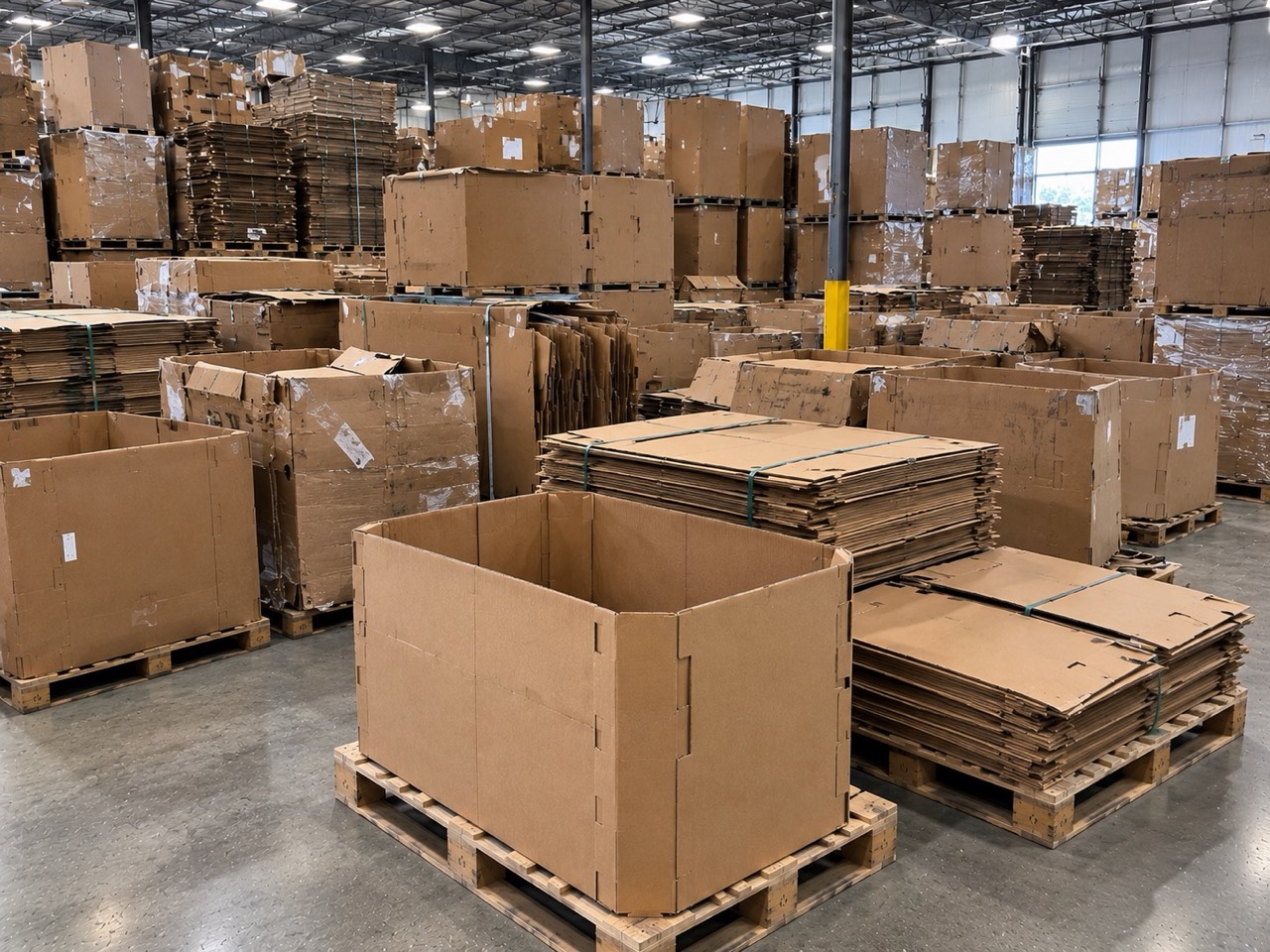
Get the bay back. Possibly get paid for it.
- Typical timeline
- 3 – 5 working days
- Common outcome
- Net credit to you
- We supply
- Labour, trailers, roll-offs
Book a cleanout assessment
Rough square footage, what is in it and your dock hours. Photographs from the doorway are enough for a first view.
Answer first
The arithmetic almost nobody runs.
Warehouse space in the Kansas City metro runs roughly $6 to $9 per square foot per year. A bay holding accumulated empties is costing real money before you count the compactor pulls, the forklift time spent working around it, or the door it has quietly taken out of service.
Against that, the reusable share of a typical accumulation is worth somewhere between $1.75 and $5.50 per box. In most cleanouts we run, those two numbers meet in the middle and the customer ends up with a credit rather than an invoice. We tell you which side of the line you are on before we book a truck.
People apologise for the state of the bay. They should be sending an invoice to whoever let it get that valuable.
Scope
What we take and how it is handled.
| Material | Handled how | Value to you | Notes |
|---|---|---|---|
| Gaylord boxes, reusable | Sorted, counted, purchased | $1.75 – $5.50 each | The bulk of the credit in most cleanouts |
| Gaylord boxes, repairable | Purchased at a lower rate | $1.75 – $2.60 each | Goes to our bench rather than a baler |
| Pallets | Sorted A / B / scrap | $3.00 – $7.00 each | Broken pallets still have value |
| Bulk bags | Assessed for history and condition | $2.50 – $6.00 each | Unknown contents cannot be purchased |
| Loose corrugated | Baled on site or hauled | OCC index per ton | Baling improves the number materially |
| Strapping, dunnage, film | Segregated for recycling | Usually cost-neutral | Kept out of the OCC stream |
| Genuine waste | Removed and disposed | Cost line | Stated separately, never buried in the quote |
Process
Five days, planned around your dock.
- 01
Assessment
Photographs first, then a site visit for anything over a trailer load. You get a written scope with the credit or cost stated plainly.
- 02
Schedule
Phased around your traffic. Roll-offs placed for staged accumulation where a single hit would block your doors.
- 03
Sort on site
Our crew sorts reusable from repairable from spent, counted jointly so the numbers are not in dispute afterwards.
- 04
Clear and settle
Everything leaves. You get counts, weights, a settlement and a diversion figure for the tonnage that avoided landfill.
Questions
Cleanouts, answered.
How much does a cleanout cost?
How fast can you clear a bay?
Do you handle things other than boxes?
Can you work around our operations?
Before we arrive
A cleanout checklist for the site.
Ten minutes of preparation is the difference between a three-day clearance and a five-day one, and the timeline is usually what matters most.
Send us, or have ready
- Photographs from the doorway of every area involved
- Rough square footage and how much of it must be cleared
- Your dock hours and the quietest window in them
- Whether a forklift and operator are available to us
- Gate, check-in and PPE requirements
- A named contact present on each day of the clearance
- Any material that must NOT be removed, clearly marked
- Whether there is anything hazardous, chemical or unidentified
- Access constraints: overhead clearance, turning space, ramps
- Your deadline, and whether it is real or aspirational
Typical jobs
Five clearances, with what they actually involved.
Anonymised from real jobs. The pattern that matters is the ratio of reusable material to genuine waste — that is what decides whether you are invoiced or paid.
- 01
Machine shop, one bay, 900 sq ft
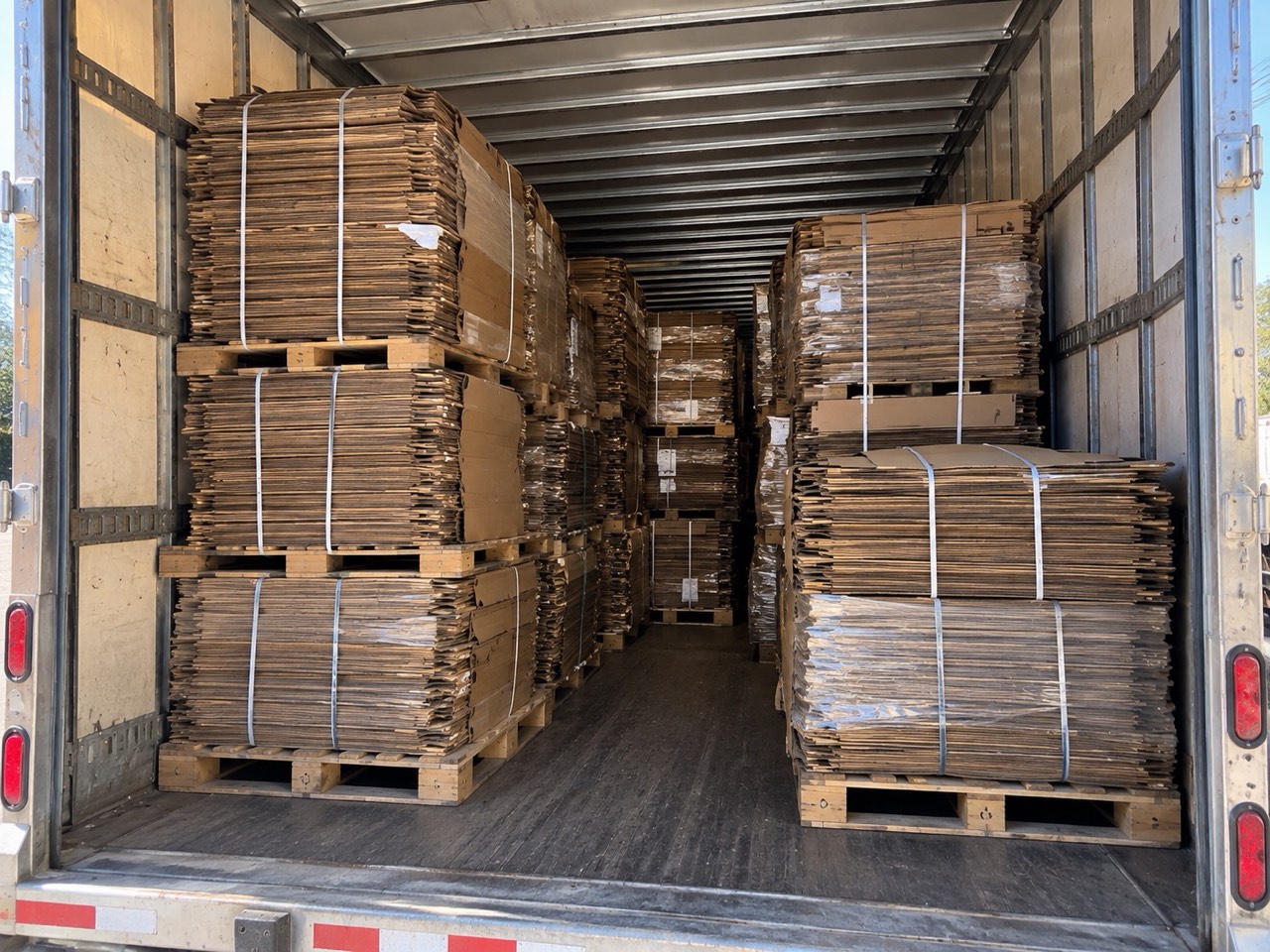
About 260 bulk boxes, 140 pallets, two tons of loose corrugated. 71% reusable. One day, one trailer, net credit of roughly $1,100 to the customer.
- 02
3PL, peak overflow, 2,400 sq ft
1,100 boxes and 4,000 cartons accumulated over a season. 64% reusable, including 1,900 single-size cartons that had been destined for a baler. Three days with staged roll-offs, net credit.
- 03
Closing distribution centre, 40,000 sq ft
Mixed everything, plus genuine waste. 38% reusable. Two weeks, phased around the closure schedule. Roughly cost-neutral, which is a good outcome on a closure.
- 04
Food plant, allergen-controlled area
Small volume, high documentation. Everything traced by source, nothing reused where contact history was unclear. Charged, and correctly so.
- 05
Recycler, mixed yard
High volume, high contamination, 19% reusable. Charged for labour and disposal, with the reusable share credited back against it.
The settlement
How the number is arrived at.
| Line | Direction | Basis | Stated separately? |
|---|---|---|---|
| Reusable containers purchased | Credit to you | Per unit, by grade, counted jointly | Yes, by grade |
| Repairable containers purchased | Credit | Per unit at the lower rate | Yes |
| Pallets purchased | Credit | Per unit, sorted A / B | Yes |
| Cartons purchased | Credit | Per unit or per lot | Yes |
| Baled OCC | Credit | Weighbridge ticket × index | Yes, with the index stated |
| Labour | Charge | Crew hours on site | Yes |
| Equipment | Charge | Trailers, roll-offs, forklift if we supply it | Yes |
| Disposal of genuine waste | Charge | At cost, with tickets | Yes, never buried in another line |
| Diversion tonnage | Information | Weights by route | Yes, for your reporting |
Send a photograph from the doorway.
That is usually enough for a first opinion on whether the bay is a cost or an asset. It is free either way.