Before
Tell us what you want to see
A specific footprint, the grading process, the repair bench, or just the general shape of it. We will have the relevant stock accessible.
The company · facility
Book a yard visit
Customers are welcome on the floor by appointment. Tell us roughly when and what you want to see.
Layout
Receiving at the east end, baler at the west. Nothing doubles back, which is how a load gets graded the day it lands instead of the week it lands.
The east wall is receiving: three dock doors dedicated to inbound, with a staging apron big enough to break down two full truckloads at once without blocking the aisle. Loads are counted off the trailer and photographed before a single box is moved, which settles almost every discrepancy before it becomes one.
The centre bay is the grading run — four lanes, each with a bench, a light bar and a moisture meter. A grader opens every box. Not a sample: every box. It sounds inefficient until you have shipped one bad pallet to a customer who then stops buying used altogether.
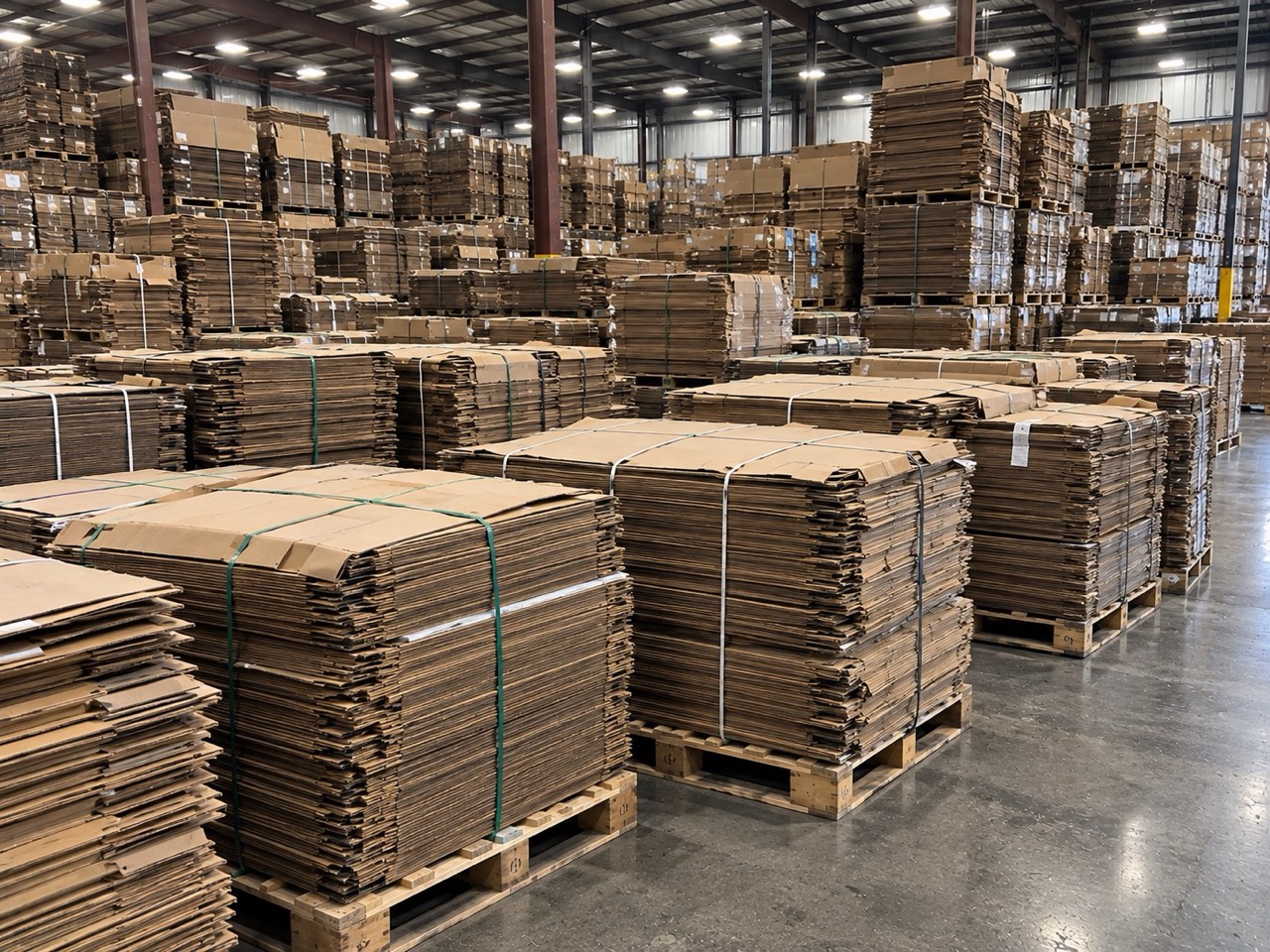
Storage sits north and south of the grading run, racked by footprint and then by grade, so a 48 × 40 × 36 five-wall in 2A lives in exactly one place and a picker never has to guess. Flattened boxes are banded in lots of twenty-five and stacked no more than nine bands high, because the tenth band is where crush damage starts showing up in our own inspections.
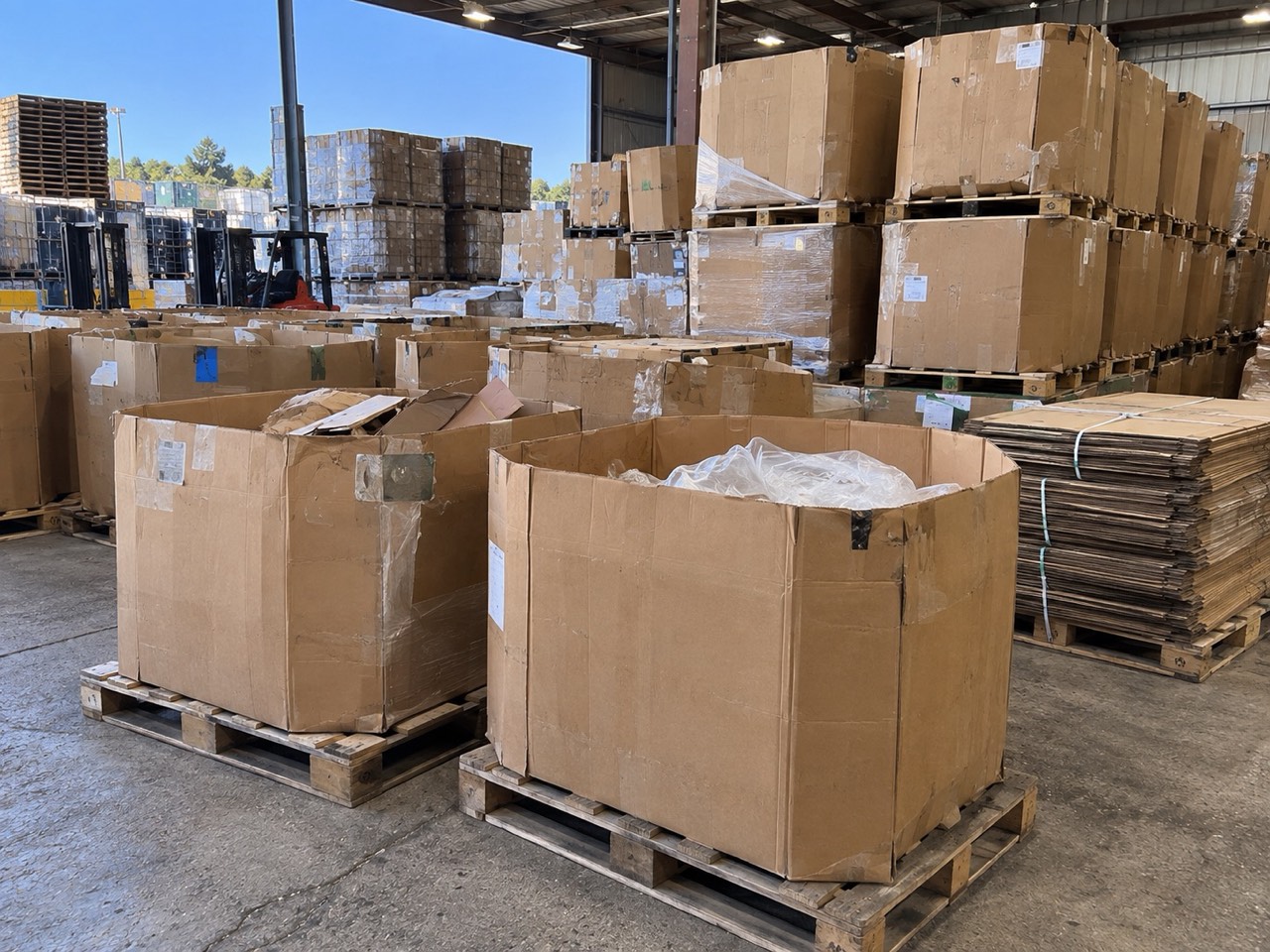
The west end holds the repair bench, the die-cutting table and the horizontal baler — the three exits that are not the front door. Everything that cannot be sold whole goes to one of them, in that order of preference.
Zones
Three inbound docks, a scale, and a camera rig. Every inbound load is counted, weighed and photographed before breakdown so the seller and the buyer see the same evidence.
3 doors · 2,400 sq ft staging
Four lanes with light bars and pin-type moisture meters. Graders work to the written 1A–5A ladder and mark each band with lot, grade and date.
Everything opened, nothing sampled
Racked by footprint then grade. Humidity is watched, not assumed — corrugated loses a measurable share of its edge crush strength once it climbs past roughly 10% moisture content.
18,000 – 26,000 boxes standing
Pneumatic stapler, reinforced gummed tape, flap and corner patch stock, and a sleeve press for rebuilding a five-wall body onto a sound base.
≈ 1,100 boxes rehabilitated a month
A 60-inch cutting table for pads, dividers, trays and display bases reclaimed from panels of boxes that could not run again whole.
Short runs from 50 pieces
Horizontal baler producing mill-spec OCC bales, plus six outbound doors with a dedicated load-check lane so nothing leaves unphotographed.
6 outbound doors
Fleet
A used gaylord is worth less than the freight that moves it. If you do not control the freight, you do not control the price.
| Equipment | Count | Typical job | Capacity |
|---|---|---|---|
| 53′ dry van | 6 | Graded box delivery, multi-stop metro runs | 26 floor positions · up to 52 stacked |
| 48′ flatbed | 2 | Baled OCC to mills, banded pallet lots | 44,000 lb |
| 26′ box truck w/ liftgate | 3 | Cleanouts and docks without a leveller | 12 – 14 gaylords |
| Roll-off tractor | 1 | Placed containers for staged cleanouts | 30 & 40 yd boxes |
| Counterbalance forklifts | 7 | Yard and trailer work | 5,000 lb |
| Walkie stackers | 4 | Grading run and band handling | 3,000 lb |
Inbound process
Piece count against the manifest, photographs of the load as it stands, moisture spot-checks on the bottom course where damp always shows first.
Every box opened, checked for crush, delamination, punctures, residue and odour, then marked to a grade with the reject reason written on any box that fails.
Sellable stock is flattened and banded. Repairables go to the bench. Contaminated or spent board goes to the baler, weighed, with the tonnage logged against the inbound lot.
Bands are racked by footprint and grade, and the counts hit our availability sheet the same afternoon — which is the sheet a buyer reads when answering your request.
The whole cycle runs in under twenty-four hours for a standard truckload. That speed is not a boast, it is a requirement: a used box that sits wet or stacked badly for a week grades a full rung lower than the box that came off the same trailer.
Storage discipline
Corrugated fails from moisture, crushing and repeated folding. A yard's floor plan and roof do more for grade retention than any amount of inspection.
Visiting
Customers are welcome on the floor by appointment. It takes about an hour and it changes how people buy afterwards.
Before
A specific footprint, the grading process, the repair bench, or just the general shape of it. We will have the relevant stock accessible.
On arrival
High-visibility vest and safety footwear required on the floor. We keep spare vests; bring your own boots.
15 min
Watch a load being opened and graded against the written ladder. This is the part that changes people's view of used packaging.
20 min
Your footprint, in the grades you buy, in the bands you would receive. Open boxes, turn them over, look at bottom edges.
10 min
Where rejected containers become 3A stock or fabricated parts. About eighteen per cent of inbound goes through one of these two.
10 min
Take boxes away with you. Most visitors leave with a pallet to run through their own process.
Yard visits, sample bands, and photographs of the exact lot you are quoted. Ask and we will set it up.
Quote request · one business day