Skip to content

The company · field note

6:40 AM to 5:10 PM, nine hundred boxes.

People ask what a used-box company actually does all day. This is one Tuesday in March, written down as it happened, because the honest answer is more interesting than the brochure version.
Boxes graded
906
Rehabilitated
15 on the bench
Landfilled
None. Never.

Ask us anything

Curious about a process, a grade or whether your material is a fit? Write it here.

A working business address — we reply by email only

US or Canadian number, e.g. (816) 555-0134

Two-letter code or full name, e.g. KS or Kansas

US ZIP (66115 or 66115-1204) or Canadian (M5V 3L9)

Whole number — units, pallets or truckloads

We reply by email — ReGaylord has no telephone line. Your number is only used if a driver needs dock directions. Answered inside one business day.

  1. 06:40

    The first trailer is already backed in

    A dry van from a Missouri compounder, forty-one bands of five-wall 48 × 40 × 36 that were emptied last week. Kwame Oyelaran-Beck opens the doors, walks the load, and photographs the back wall before anything moves. If the bottom course is damp — and after rain it usually is on one side — it is easier to prove now than to argue later.
  2. 07:15

    Grading lanes open

    Four graders, four benches, four light bars. The rhythm is unmistakable from the office: the double thump of a box opened and squared, a pause, then either the clack of a band stapler or the flat slap of a reject going onto the bench cart. Eleven seconds a box on a clean load, closer to forty on a mixed cleanout.

  3. 08:30

    The first argument of the day

    A lot of 4-wall boxes that photographed beautifully turn out to have a manufacturer's butt joint that has been re-glued badly at some point. They are square, they are dry, and they will not hold a 1,400 lb load. They grade 4A, they go to the bench, and the buyer who was hoping for 2A gets an email at 08:41 rather than a surprise on delivery.

  4. 10:05

    Outbound to a seed processor

    Two hundred and sixty 2A boxes going west, banded in lots of twenty-five, with liners on the same pallet because the customer fills with sorghum and learned the hard way about condensation on a cold trailer floor.

  5. 11:50

    The bench catches up

    Marisol Veracruz-Haddad works through the morning's repairables: nine flap patches, four corner rebuilds, two full sleeve replacements where the base was perfect and the body was not. Eleven of those fifteen boxes will sell as 3A this week. The other four go to the cutting table.

  6. 13:20

    A cleanout call

    A 3PL in the Northland is losing a bay to eleven hundred empties. Photographs arrive, a price per unit goes back within the hour, and a 26-footer is scheduled for Thursday. Nobody has spoken aloud; everything is in writing, which is exactly how the count stays honest.

  7. 15:00

    Cutting table

    Panels from this week's rejects become 340 corner pads for a local appliance shipper. Board that was destined for a bale at eighty dollars a ton leaves as a fabricated part instead — and the customer's alternative was virgin die-cut stock trucked in from Illinois.

  8. 16:30

    Bale-out

    What is genuinely finished goes horizontal. Today: 2.1 tons. Every pound is weighed against the lot it came in on, which is how a customer's diversion report ends up with real numbers rather than an estimate.

  9. 17:10

    Availability sheet updated

    Counts by footprint and grade go onto the sheet the buyers read tomorrow morning. Nine hundred and six boxes graded, six hundred and eleven shipped, fifteen rehabilitated, 2.1 tons baled, nothing landfilled.

Every box on that trailer was going to be compacted on Friday. Instead six hundred of them are holding somebody's regrind by the weekend. That is the entire job.
Kwame Oyelaran-Beck, inbound

Why we publish this

Reuse has a credibility problem, and it is our own industry's fault. Too many suppliers describe grades loosely, photograph the best pallet, and let the customer discover the difference at their own dock. The antidote is not a nicer adjective. It is showing the process in enough detail that you can judge whether it is rigorous.

If any part of the day above sounds like something you would want to watch in person, you are welcome to. We run yard visits most weeks, and customers who come once tend to buy on specification rather than on photographs forever after.

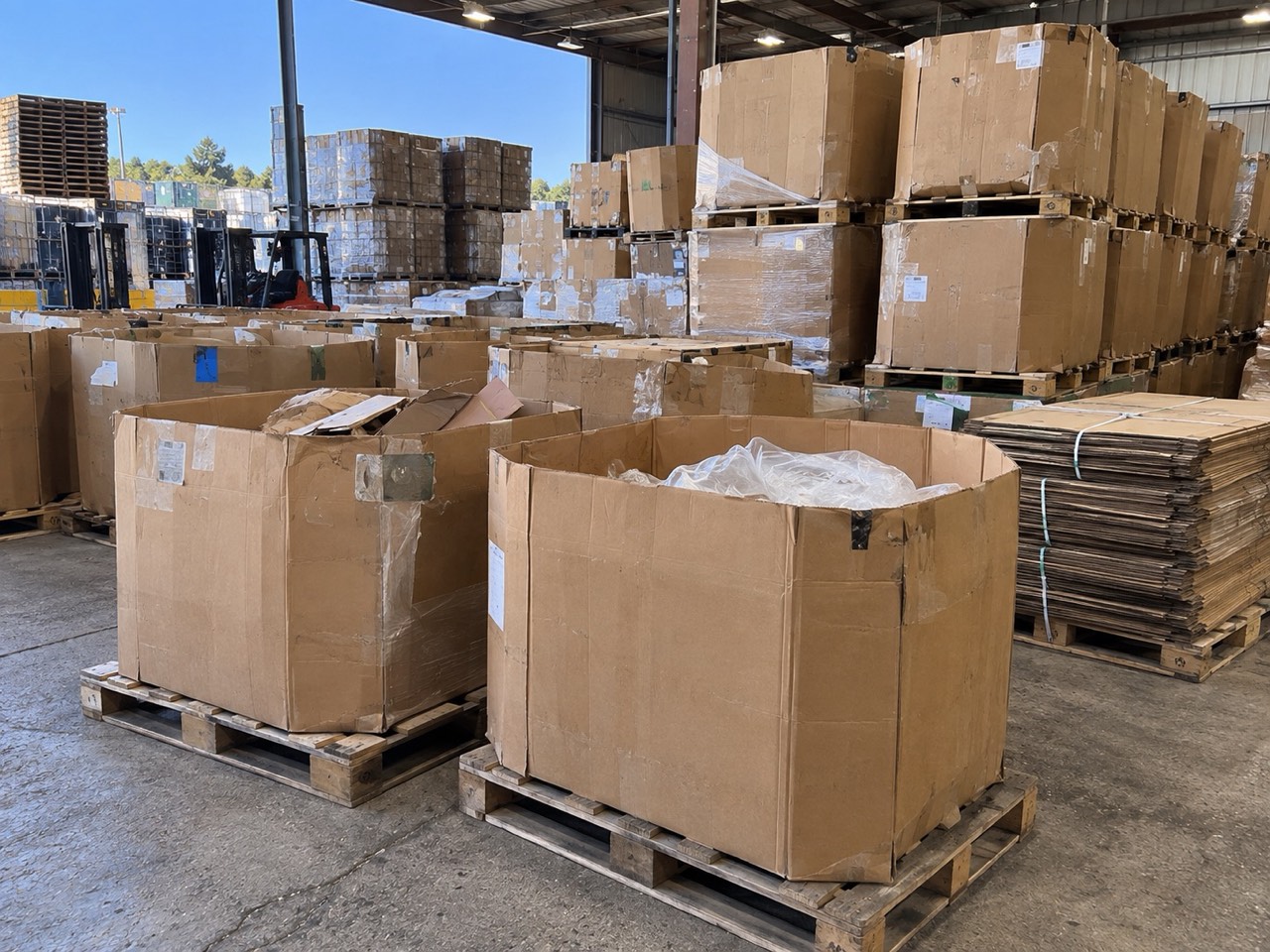
Open warehouse dock with used bulk boxes on pallets in the foreground and a forklift and pallet stacks in the yard beyond
The receiving apron at Fiberglass Rd, mid-morning
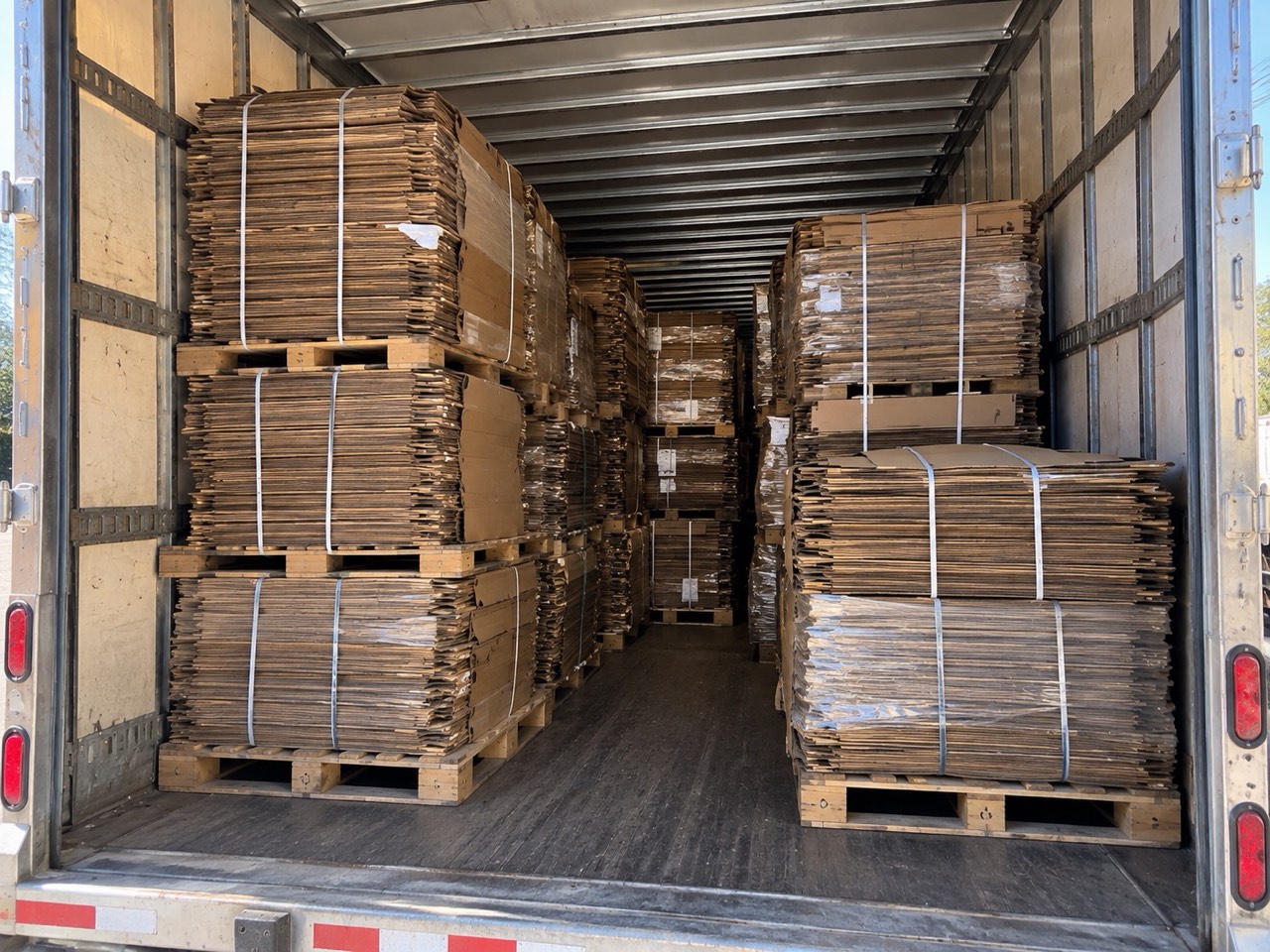
The interior of a loaded 53-foot trailer, double-stacked with pallets of banded flattened bulk boxes
17:10 — the outbound load, photographed before the doors close

The numbers behind the day

What one Tuesday actually produced.

Recorded because we were writing it down anyway. A normal day, neither the best nor the worst of that month.

Tuesday 17 March, in figures
MeasureFigureNote
Inbound loads3Two scheduled, one cleanout collection
Boxes graded906Every one opened individually
Graded 1A24Over-ordered production stock, never used
Graded 2A241The bulk of the compounder load
Graded 3A398Ordinary honest wear
Graded 4A172Mostly the re-glued butt joints
Rejected71Damp bottom course from the rain the previous night
Rehabilitated on the bench15Eleven back out as 3A this week
Sent to the cutting table4Became 340 corner pads
Baled2.1 tonsWeighed against the inbound lots
Boxes shipped out611Two outbound loads plus a metro run
Landfilled0As every day since 2019
Quotes answered31Every one read by a buyer
Photographs taken12Four per inbound load

What a day tells you

Five things that only show up when you write the day down.

We started recording days like this to train new graders. It turned out to be more useful than that.

  1. 01

    Weather shows up in the grades

    Seventy-one rejects that Tuesday, almost all of them from one load that sat uncovered through overnight rain before collection. On a dry week that number is closer to twenty.

  2. 02

    The bad news travels fastest

    The 4A downgrade on the re-glued joints was emailed to the buyer at 08:41, forty minutes after it was discovered. A surprise on delivery would have cost the account.

  3. 03

    The bench pays for itself in units, not dollars

    Fifteen boxes rehabilitated is about $118 of contribution. What it actually buys is a grading team that can afford to be strict.

  4. 04

    Cleanouts are unpredictable and worth it

    The Northland call at 13:20 was eleven hundred empties nobody had valued. It became a three-day clearance and a standing fortnightly collection.

  5. 05

    Everything is written

    Nine hundred and six grading decisions, thirty-one quotes, three loads, and not a single phone call. That is not a limitation; it is why the counts are never in dispute.

Tomorrow's trailer could be yours.

Inbound or outbound — tell us what you have or what you need and we will slot it into a day much like this one.

Get a quote